 © 2023 / 2024 - QHIQ
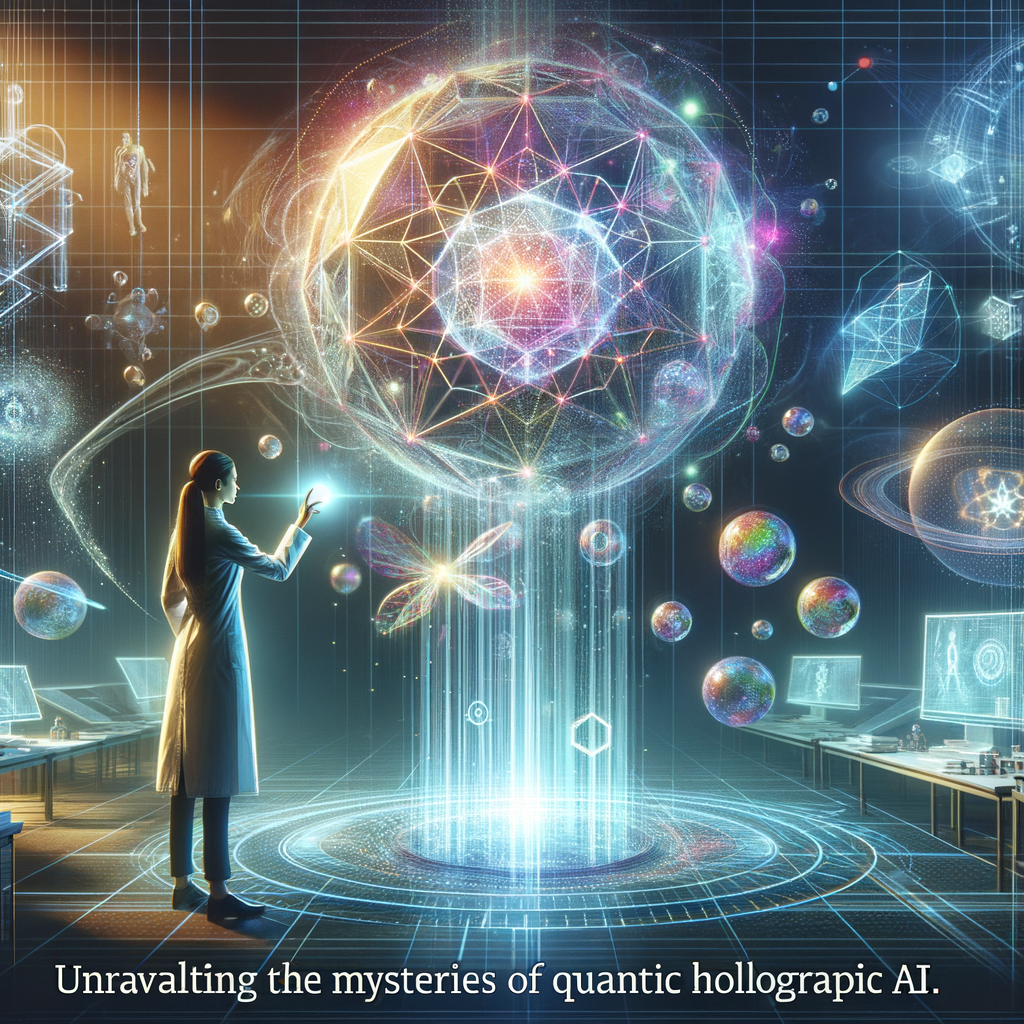
Quantic Holography meets Artificial Intelligence!
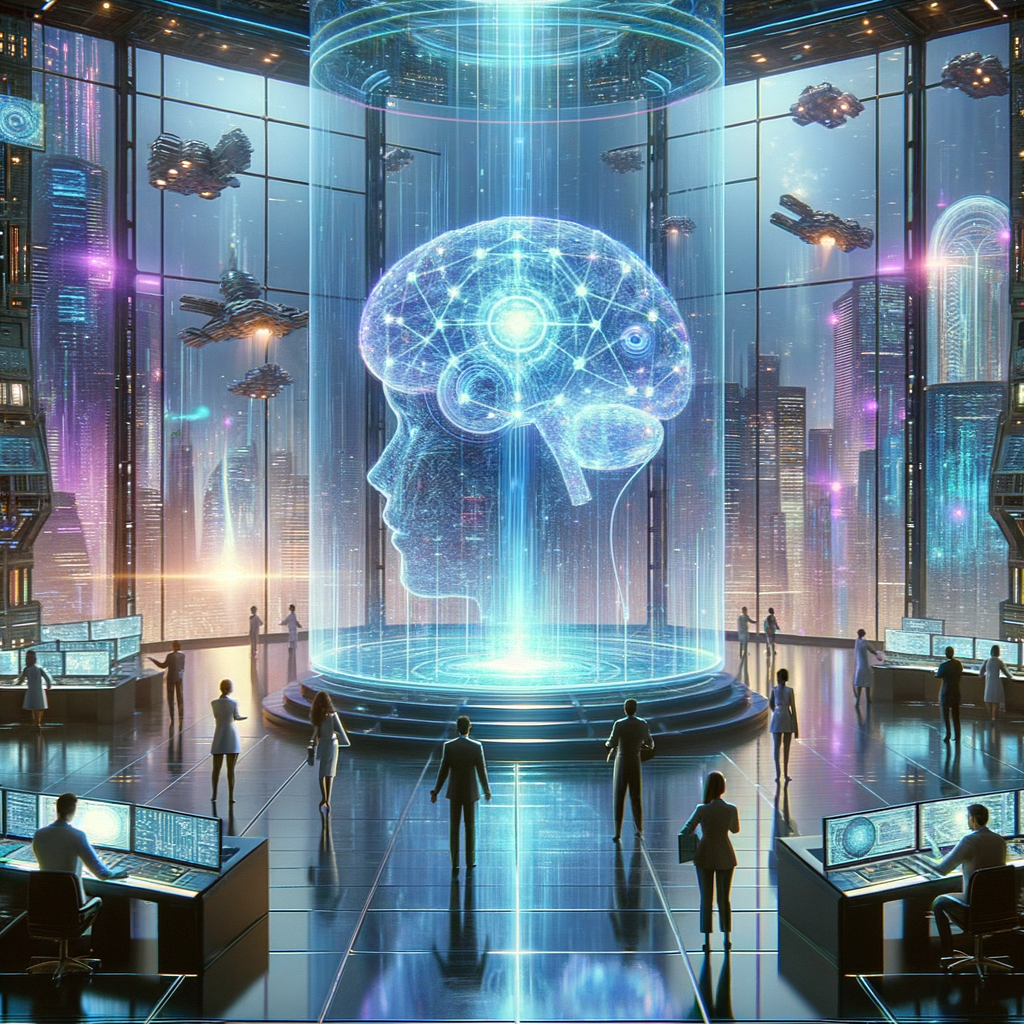
In the rapidly-evolving tech landscape, quantic holographic artificial intelligence stands at the forefront of innovation. Combining the enigmatic principles of quantum mechanics and the intricate nuances of holography, QHIQ is paving the way for a new era in intelligent computing systems. Unlike classical approaches where data is processed in a linear and binary manner, quantic holographic AI leverages the superpositions, entanglements, and non-linear propagations to deduce patterns and insights.
Deciphering the Core: Key Concepts and Principles.
At the heart of quantic holographic AI lies the symbiotic relationship between quantum computing and holographic data representation. Quantum states are represented as holograms, establishing an intricate framework where infinite computations can occur simultaneously. This synergistic interaction facilitates data processing on an unprecedented scale, enabling the execution of complex algorithms that far surpass the capabilities of traditional AI models.
def holographic_superposition(state):
    return [quantum_entangle(x) for x in state]
def quantum_entangle(input):
    # Entangle quantum bits
    return quantum_operator(input)
Recent Advancements are Reshaping the Horizon!
Recent advancements in quantic holographic AI are nothing short of revolutionary. By harnessing the quantum interference patterns, researchers have pioneered algorithms capable of computational transcendence, providing exponential processing power. This burgeoning field has witnessed the development of Quantum Neural Networks (QNNs) which utilize holographic architectures to achieve unparalleled parallel processing capabilities, drastically increasing both efficiency and accuracy in data interpretation and decision making processes.
Challenges: The Daunting Path Ahead.
Managing a startup within this avant-garde domain is fraught with challenges. One of the foremost hurdles is the exorbitant cost of quantum infrastructure, often necessitating investments beyond the typical startup's reach. Additionally, instilling investor confidence in such uncharted territory requires a robust narrative backed by empirical research and tangible prototype developments. The intertwining complexities of quantum physics and AI create an intricate tapestry that demands mastery from both technical and managerial perspectives.
Code Miracles: The Intricate Workings Behind the Curtains.
Developing algorithms for quantic holographic AI requires marrying abstract quantum theory with practical programming. Developers often rely on highly sophisticated programming languages such as Qiskit and others tailored for quantum computing. These languages provide the foundational building blocks for constructing algorithms that can exploit quantum phenomena, ultimately rendering them into the holographic AI models we see today.
import qiskit
from qiskit import QuantumCircuit
qc = QuantumCircuit(2)
qc.h(0)
qc.cx(0, 1)
Envisioning the Future: Paradigm Shifts and Possibilities.
The future of quantic holographic AI holds vast potential for transformative impacts across industries. From optimizing logistics operations through advanced predictive analytics to revolutionizing the healthcare sector with bespoke pharmacological formulations, the applications are boundless. As companies like Quantum Holographic IQ chart new territories, the prospects of achieving true artificial general intelligence edge closer, promising a future where machines not only replicate but enhance the entirety of human cognitive functions.