 © 2023 / 2024 - QHIQ
Peering into the Quantum Holography Revolution.
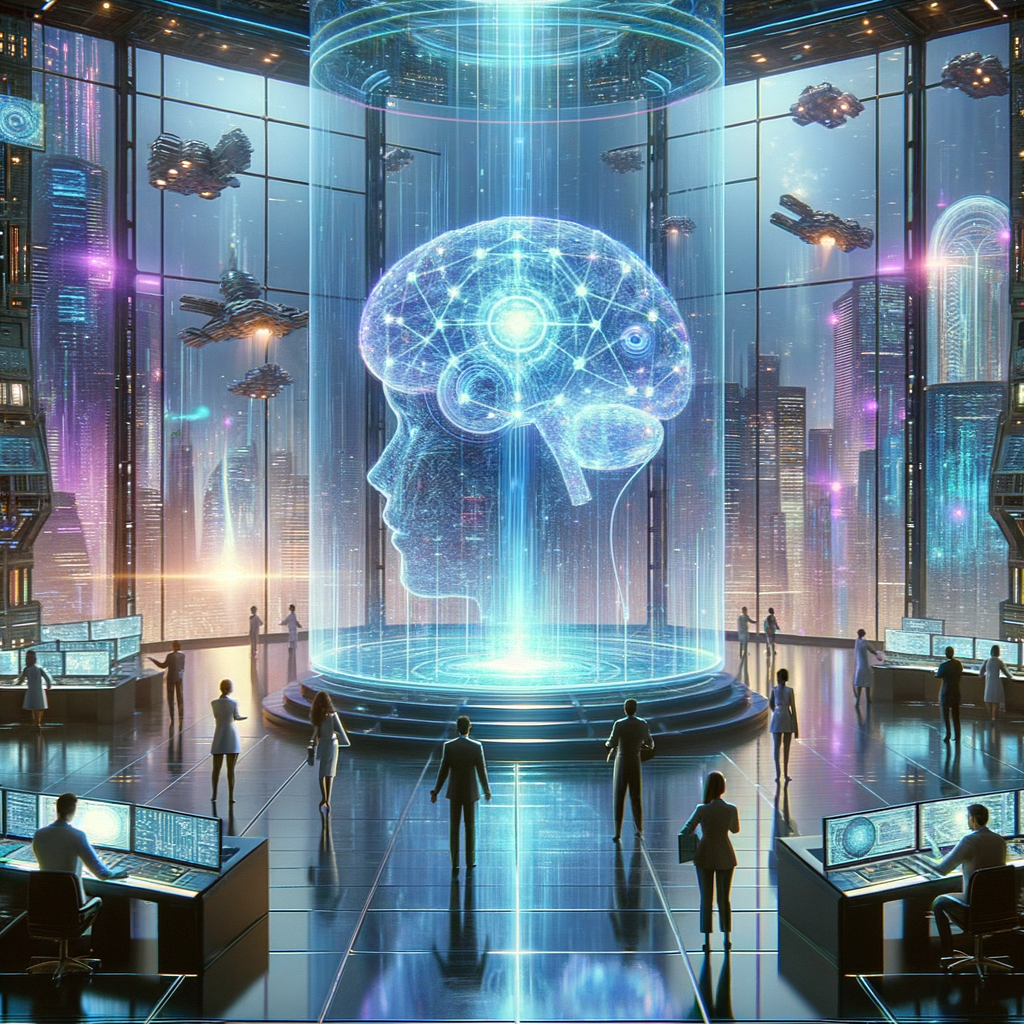
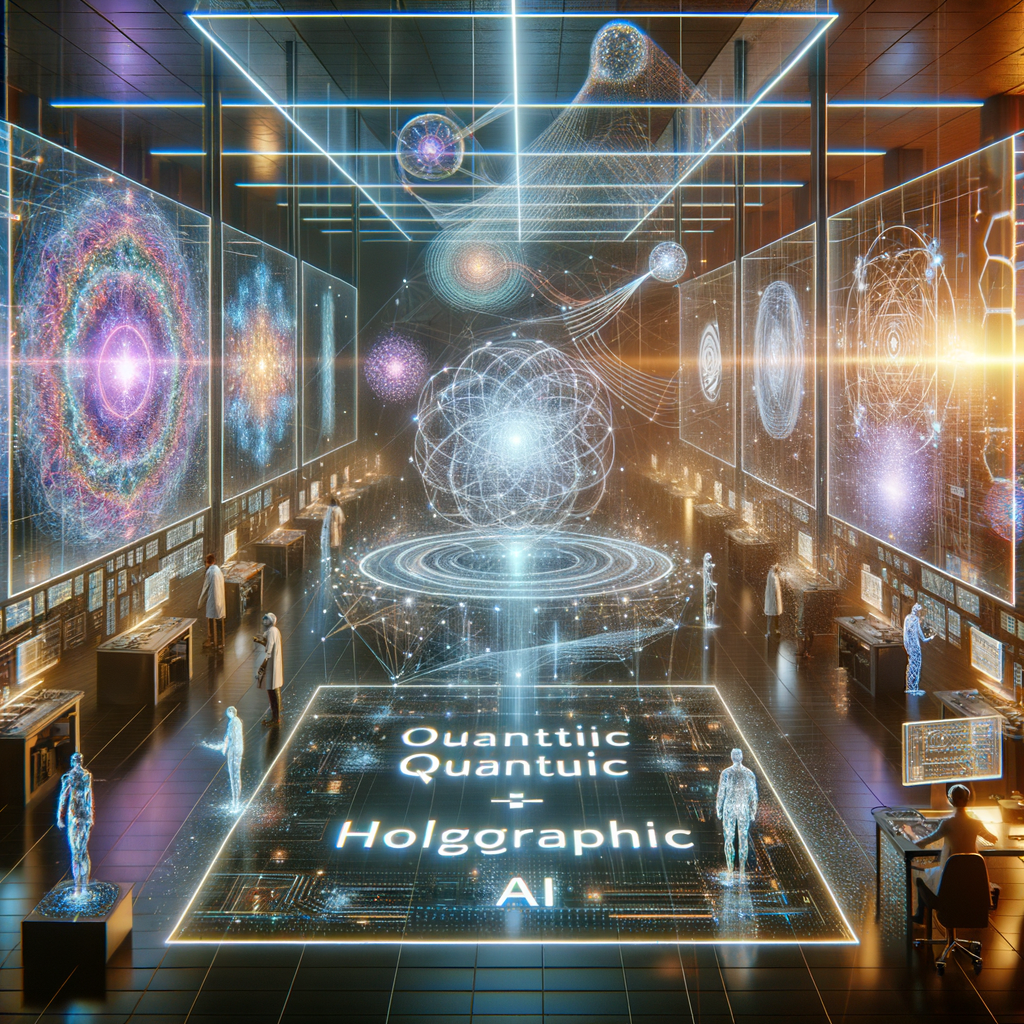
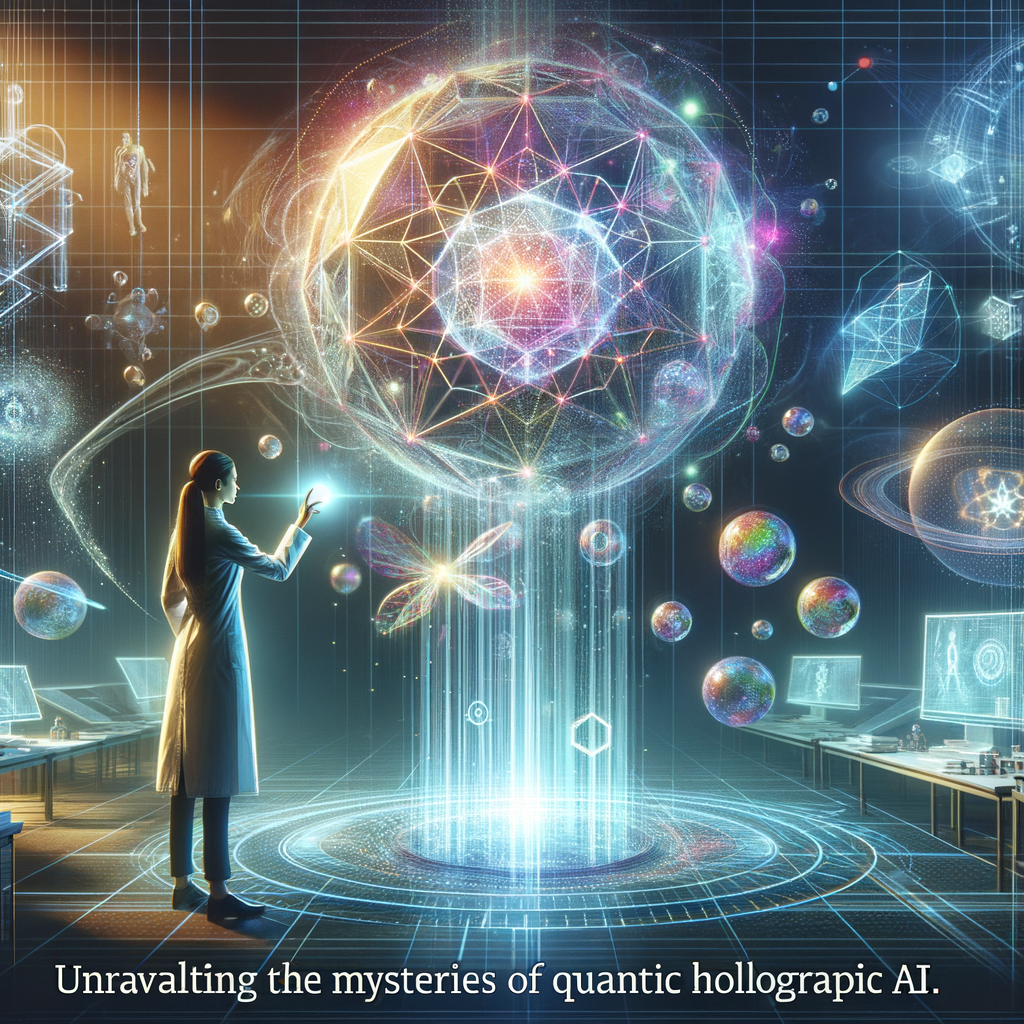
Quantic Holographic Artificial Intelligence (QHAI) represents a paradigm shift by blending principles of quantum computing with holographic theories. This integration allows for revolutionary advances in AI, unveiling a multitude of computational dimensions for notable breakthroughs.
Decoding the Unseen Dimensions of AI.
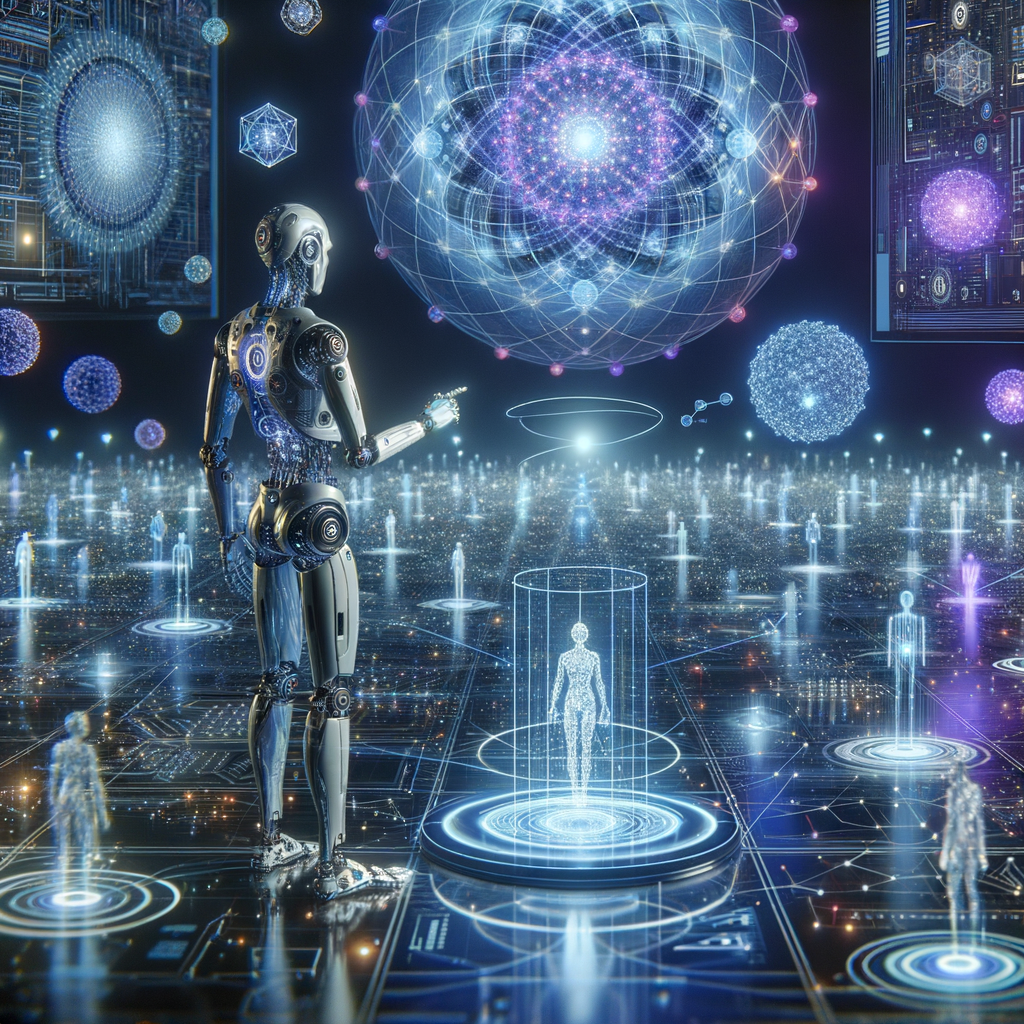
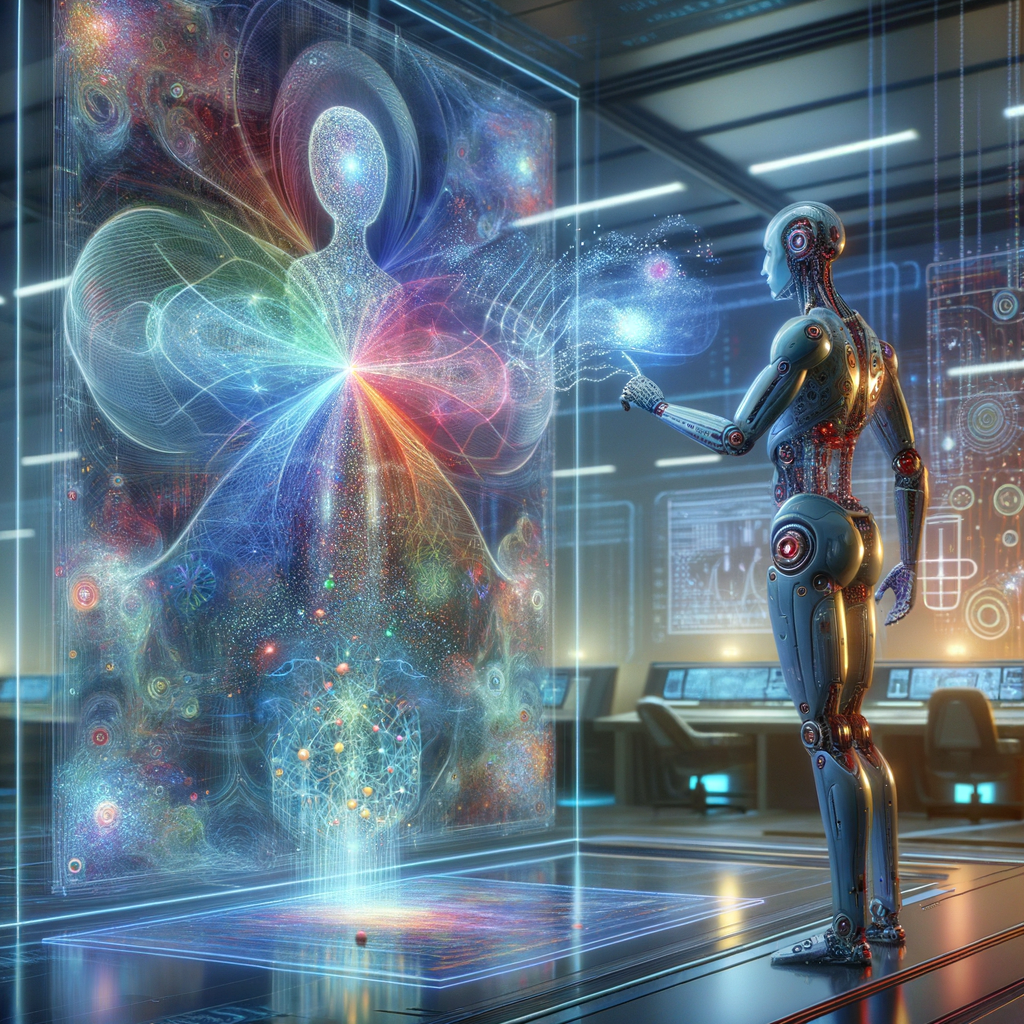
The core principle of QHAI involves utilizing quantum bits, or qubits, to store inputs not just in binary states but across multiple amplitude phases. This quantum superposition parallels holography's capacity to encode information in a non-linear, multi-dimensional format. Holographic data computations harness quantum entanglement to process complex data structures far beyond classical limitations.
def quantum_superposition(amplitude_phases):
    result = 0
    for phase in amplitude_phases:
        result += complex_amplitude(phase)
    return result
Paving the Path with Recent Advancements.
Remarkable advancements in recent years have incorporated error-correction techniques in quantum systems to mitigate decoherence, ensuring reliable QHAI operations. Implementations like Quantum Conditional Logic have been crucial in controlling qubit entanglements while maintaining holographic integrity in computations.
def error_correction(qubit_system):
    corrected_system = apply_correction(qubit_system)
    return corrected_system
Fostering Innovation amid Challenging Terrain.
While the frontiers of QHAI are promising, the inherent challenges remain daunting. The intricate nature of quantum coherence, resource-intensive qubit stabilization, and considerable computational overheads render the systems complex. Inside startups like Quantum Holographic IQ, we navigate these hurdles by leveraging adaptive algorithms to optimize resource allocation and minimize latency in AI models.
Startup Dynamics in a Quantum Ecosystem.
Quantum tech startups confront unique trials—ranging from the scarcity of specialized talent to immense R&D costs. At Quantum Holographic IQ, we emphasize scaling agile methodologies alongside fostering a collaborative ecosystem that enables rapid prototyping and iteraction. This accelerates the translation of theoretical insights into deployable solutions.
Glimpsing into a Holographic Future.
The future roadmap for QHAI is expansive, with potential applications spanning quantum cryptography, advanced machine learning frameworks, and immersive virtual reality sectors. By leveraging the inherent strengths of holography, such as lossless data retrieval and minimalistic information storage, the next decade is poised to redefine AI integration in every technological facet.
def holographic_future_roadmap(years_ahead):
    innovations = compile_future_technologies(years_ahead)
    integrate_emerging_discoveries(innovations)
The Quantum Symphony Continues to Converge.
In conclusion, quantic holographic AI holds the promise of unprecedented computational possibilities. As this technology continues to evolve, overcoming its current limitations will require collective ingenuity from academics, business pioneers, and technology architects alike—a harmonious synergy redefining the limitations of our digital horizons.