 © 2023 / 2024 - QHIQ
The Quantum Renaissance: Disruptive Tech Redefines the AI Landscape.
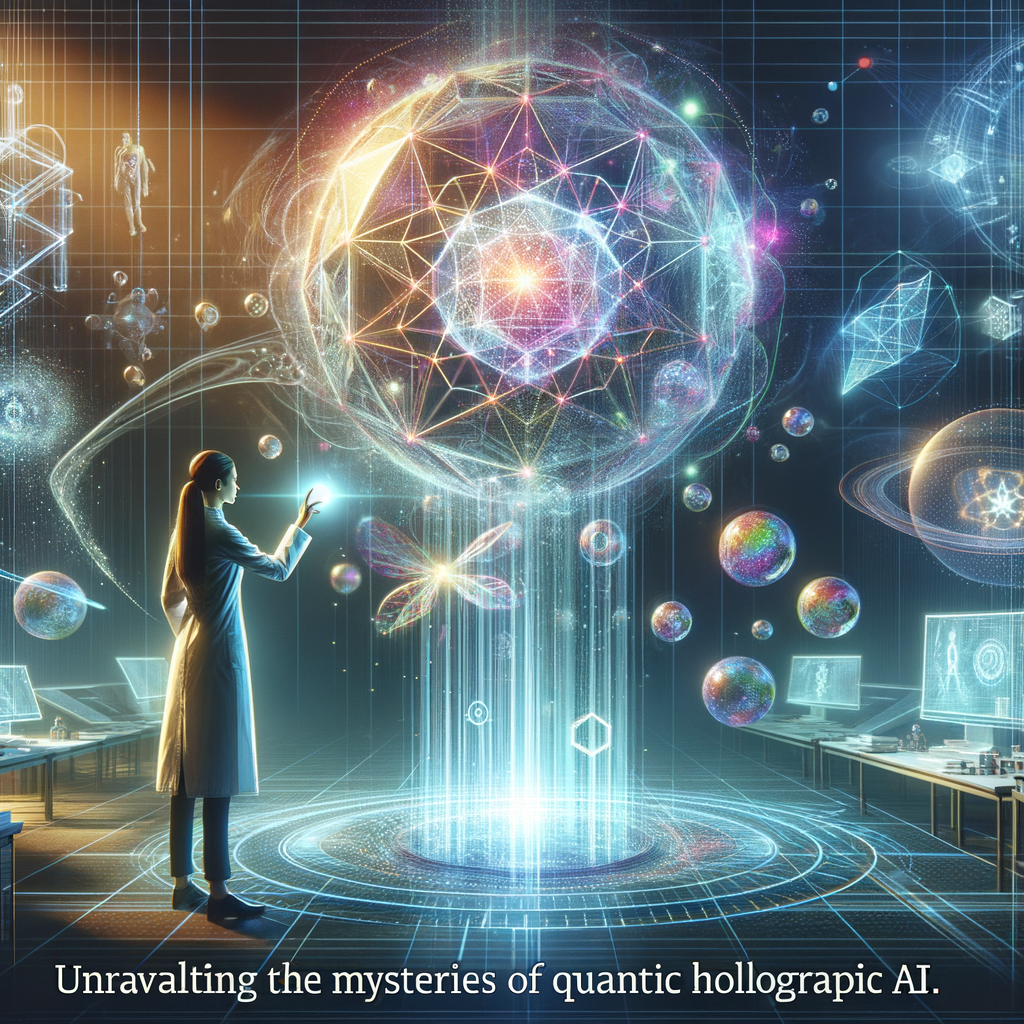
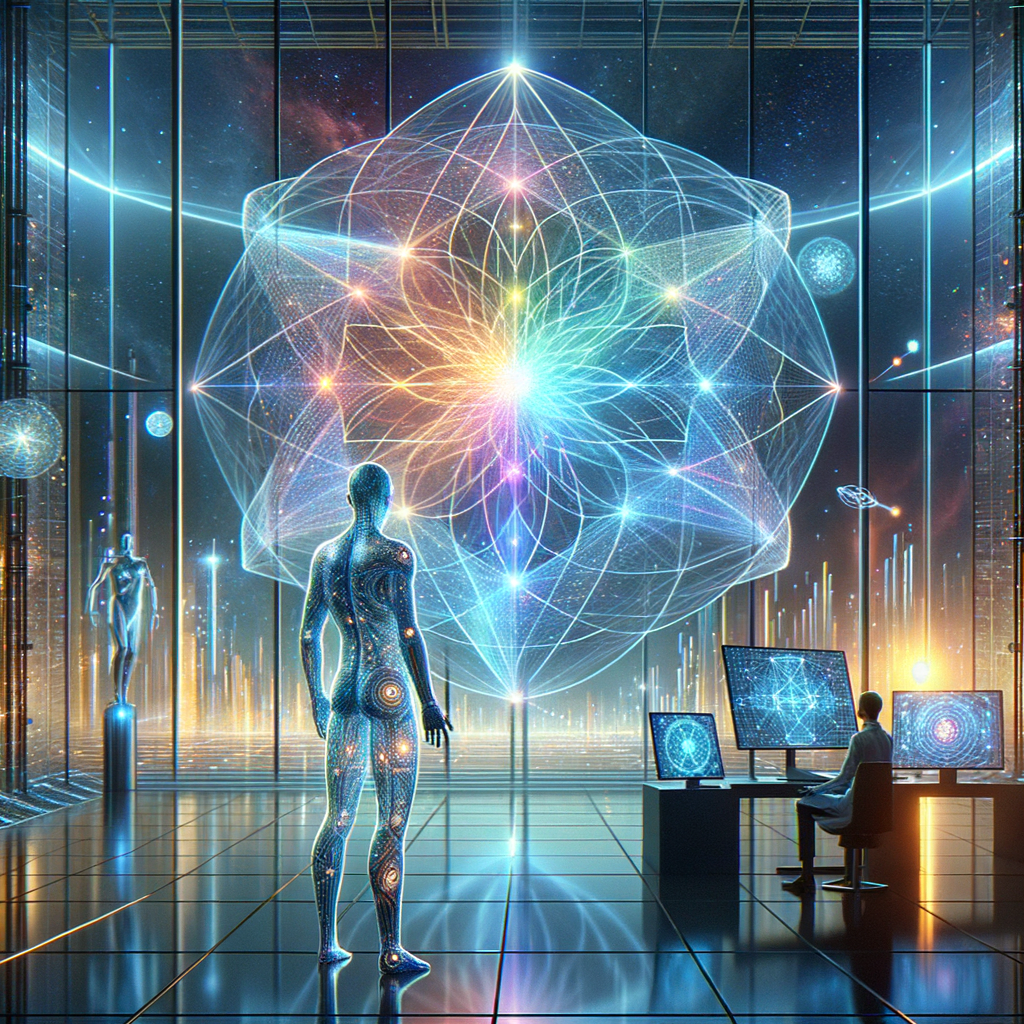
In recent years, the intersection of quantum computing and artificial intelligence has given birth to a revolutionary paradigm known as quantic holographic artificial intelligence (QHAI). QHAI leverages quantum coherence and entanglement to exponentially enhance computational capabilities, making previously insurmountable problems solvable. This nascent technology is poised to redefine how we approach learning algorithms, data processing, and complex decision-making tasks in unprecedented ways.
Harnessing Entanglement: Unraveling the Quantum Fabric.
The principles of quantum superposition and entanglement serve as the cornerstone of QHAI, allowing for simultaneous computation of multiple states, outpacing classical binary systems. By encoding data into quantic holograms, QHAI taps into multidimensional spaces for richer and more efficient processing. The integration of these quantum states into AI models propels us into new computational realms, redefining efficiency and scope.
import numpy as np
def quantum_state_vector():
    # Example function to create a quantum state vector
    return np.array([1, 0, 0, 1]) / np.sqrt(2)
state_vector = quantum_state_vector()
The Cutting Edge: Groundbreaking Developments in QHAI.
Recent advancements in quantum-computational neural networks (QCNNs) have paved the way for enhanced pattern recognition and predictive analytics. These systems employ quantum bits (qubits) to exponentially increase the data throughput, resulting in faster convergence and reduced computational latency. This quantum leap has empowered industries ranging from pharmaceuticals to aerospace engineering with pioneering predictive models and AI-driven insights.
class QuantumNeuralNetwork:
    def __init__(self, qubits):
        self.qubits = qubits
    def train(self, data):
        pass  # Implement quantum training algorithm
Navigating the Uncharted: Startup Challenges in Quantum AI.
While the potential of quantum AI is immense, startups in this domain face challenges spanning technological, financial, and operational frontiers. Developing quantum-compatible hardware requires monumental investment and innovation to achieve low error rates and stable qubit operations. Moreover, leveraging quantum algorithms mandates expertise that bridges computer science and quantum mechanics, a synergy that is still rare in the current talent pool.
From Vision to Reality: QHAI's Promising Future.
The future of QHAI sparkles with potential, as global tech giants, governments, and academia invest heavily in quantum research. Promising trends include the development of error-correcting quantum processors, which will enable more robust and scalable quantum systems. As the technology matures, industries will witness AI solutions that operate on incomprehensible scales, solving problems deemed impossible with today’s classical computers.
Pioneering Innovation: QHIQ's Journey in Quantum AI.
As a spearhead in the field, Quantum Holographic IQ (QHIQ) is at the forefront of developing consumer-grade quantum AI solutions. Our strategic collaborations and R&D initiatives focus on minimizing quantum noise and decoherence, optimizing algorithms for hybrid classical-quantum environments. We are committed to framing the future where AI transcends its current limitations, manifesting the quantum revolution into everyday applications.