 © 2023 / 2024 - QHIQ
Quantic Holographic AI is redefining technology's frontiers.
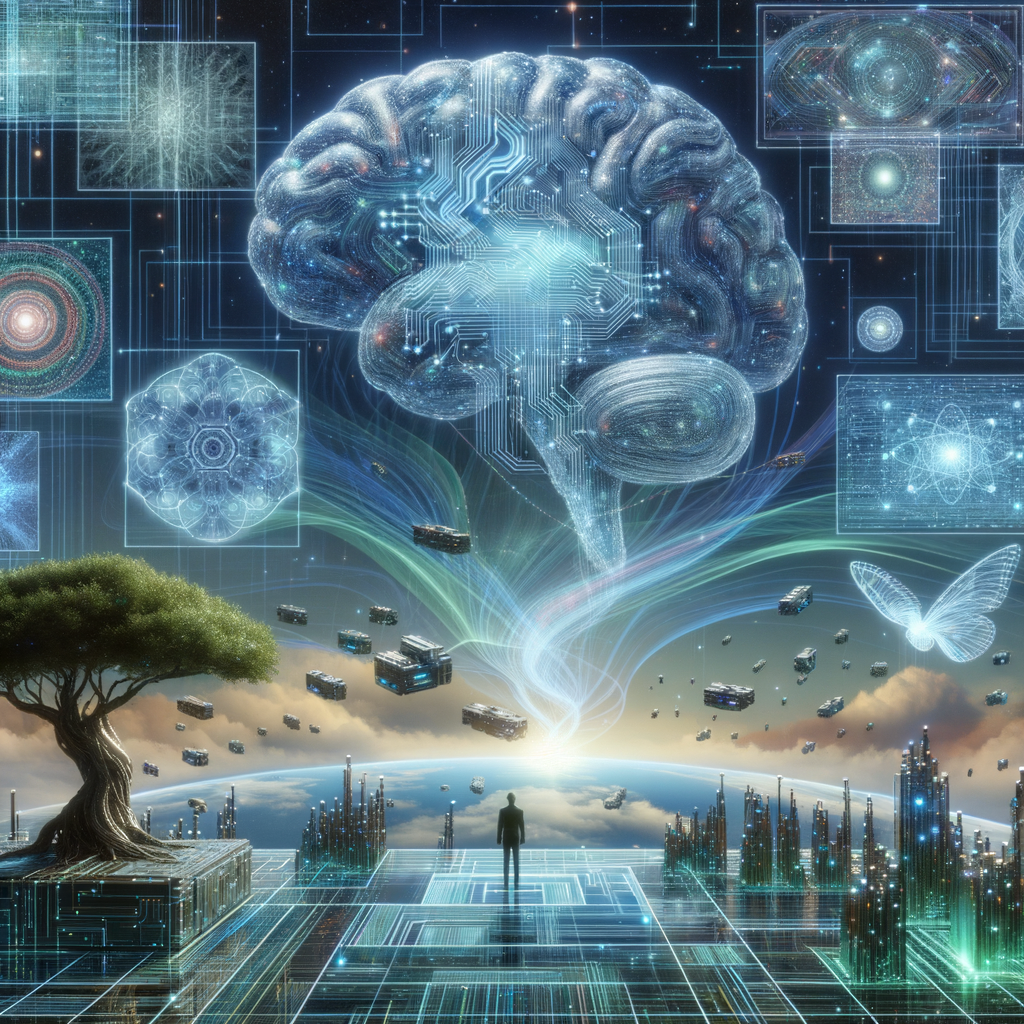
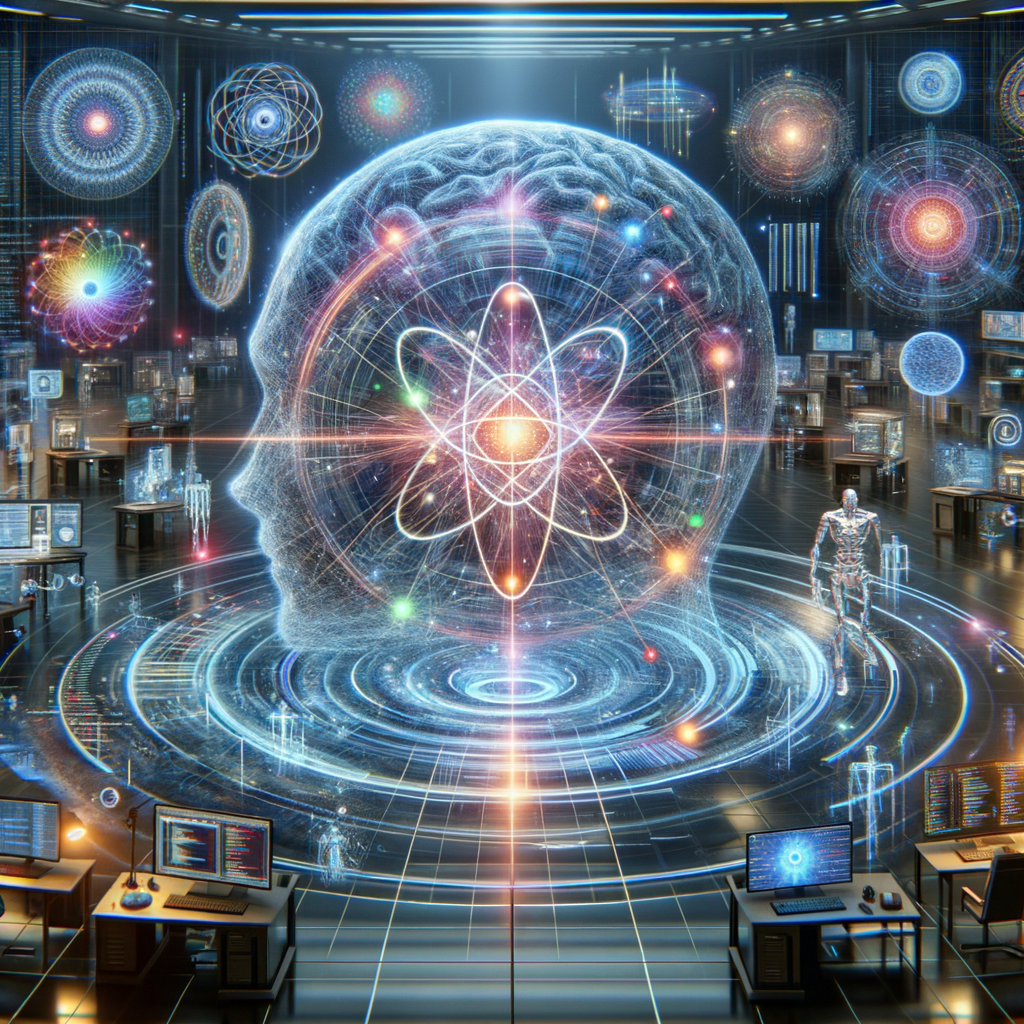
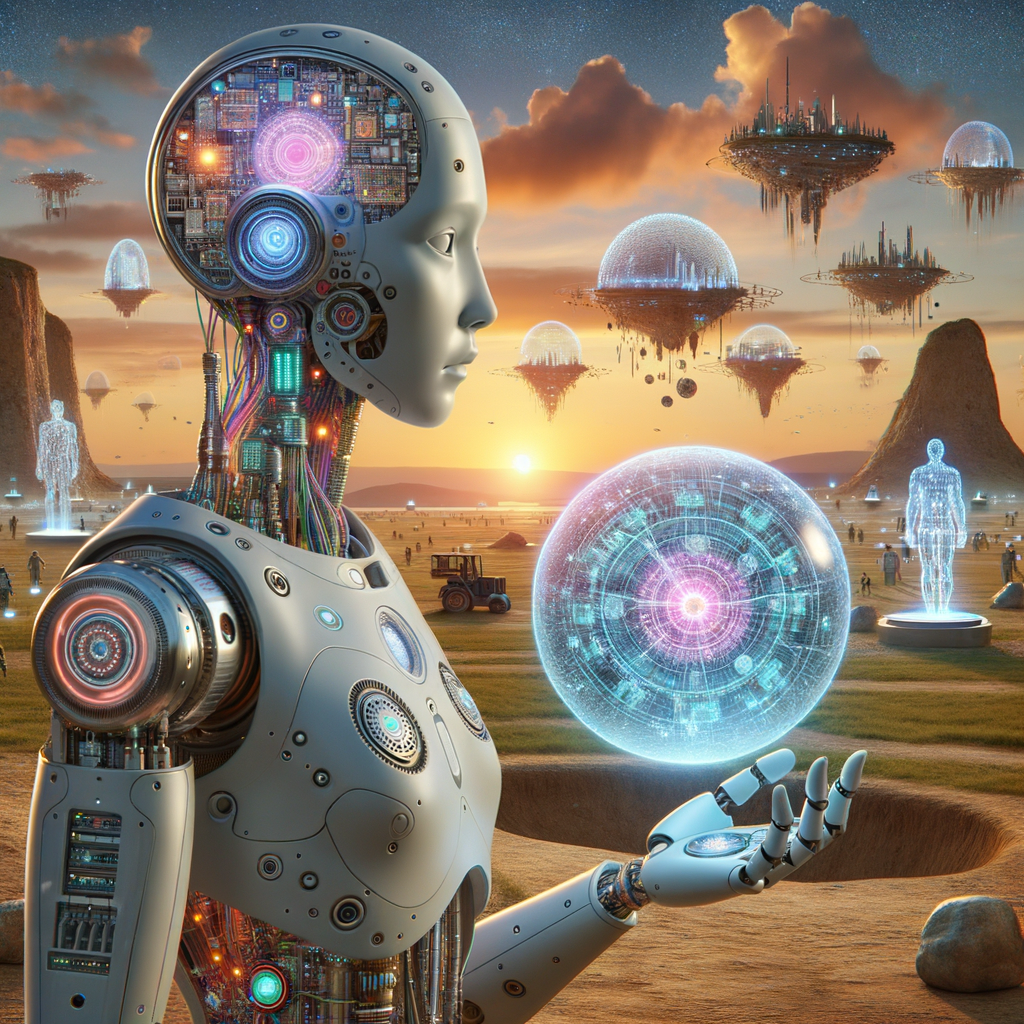
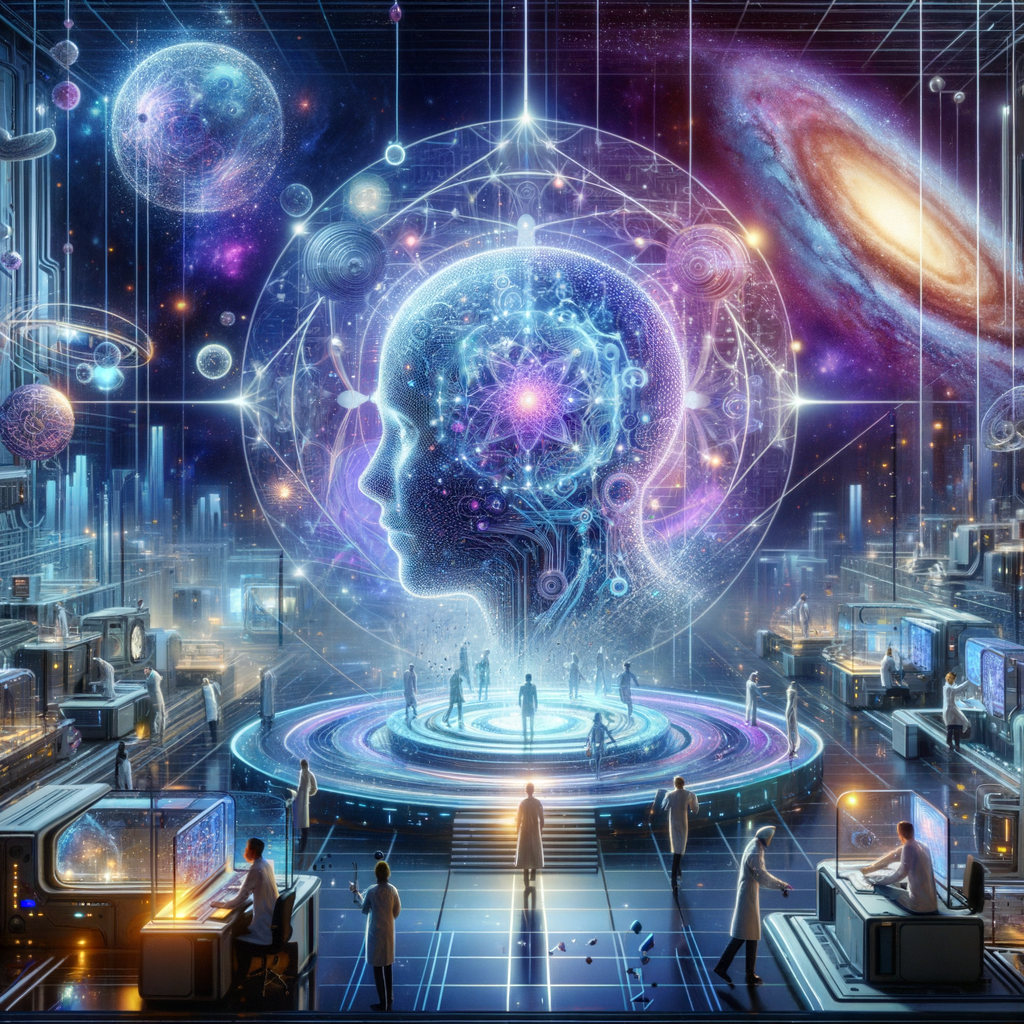
Quantic Holographic Artificial Intelligence (QHAI) embodies the confluence of quantum computing, holography, and artificial intelligence, each a cornerstone of its profound transformative potential. This groundbreaking synthesis leverages quantum mechanics' principles to enhance computational capabilities, introducing unparalleled dimensions in data processing and analysis. Holography adds a spatial element by encoding multi-dimensional data patterns, allowing AIs to navigate and interpret complex datasets with astonishing efficacy. The convergence of these technologies is not merely a leap forward; it represents a paradigm shift in how machines can mimic cognitive processes to surpass traditional computational confines.
The pulse of innovation beats in the heart of recent advancements in QHAI.
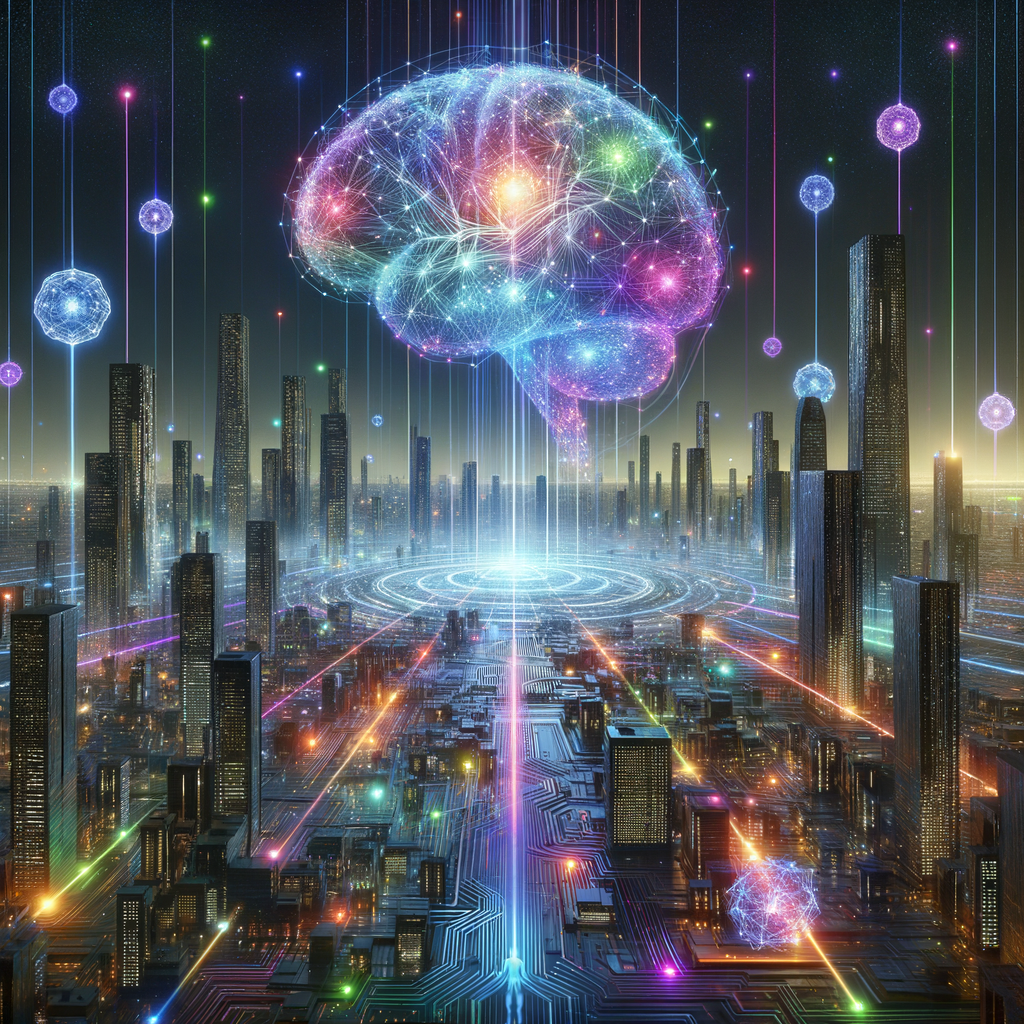
Recent advancements in QHAI have been characterized by an explosive growth in quantum annealing applications, which have improved optimization problems exponentially. Companies are adopting holistic architectures that consolidate quantum registers with neural network frameworks, enhancing predictive accuracies in multifactorial data fields. New systems now employ quantum entanglement and superposition to handle bigger datasets, thus allowing more comprehensive insights and predictions. QHAI systems are becoming adept at processing holographic data structures, which enable them to simulate scenarios previously thought impossible in classic AI paradigms.
class QuantumHolographicAI:
    def __init__(self, quantum_bits, holographic_data):
        self.quantum_bits = quantum_bits
        self.holographic_data = holographic_data
    def process_data(self):
        # Utilize quantum entanglement and superpositions
        processed_data = self._quantum_annealing(self.holographic_data)
        return processed_data
    def _quantum_annealing(self, data):
        # Placeholder for quantum annealing logic
        entangled_data = [bit for bit in self.quantum_bits]
        return entangled_data * 3
Overcoming challenges in QHAI development requires resilience and ingenuity.
Despite its promising outlook, QHAI development is fraught with challenges such as maintaining coherent qubit states and scaling quantum networks seamlessly. The entangled state coherence is notoriously difficult to sustain, frequently disrupted by decoherence due to environmental interference. Moreover, the integration of such esoteric technology into existing infrastructure brings about compatibility issues. As emerging technologies evolve, developers and engineers must continually innovate to bridge these gaps, inventing novel algorithms and architectures to stabilize and harness the fleeting nature of quantum states effectively.
def stabilize_qubits(qubits):
    # Implement error correction methods to maintain coherence
    stable_qubits = []
    for qubit in qubits:
        if self._check_coherence(qubit):
            stable_qubits.append(qubit)
    return stable_qubits
def _check_coherence(self, qubit):
    # Placeholder for coherence checking logic
    return True
Startups spearheading QHAI face unique hurdles in today’s tech landscape.
For startups like Quantum Holographic IQ (QHIQ), the challenges extend beyond technological innovation to include financial sustainability and market penetration. Navigating the venture capital ecosystem to secure funding requires demonstrating not only technical feasibility but also potential application value. The rapidly evolving nature of QHAI demands that startups remain agile and anticipatory of market trends, positioning themselves not merely as tech providers but as key contributors in reshaping industry standards. Balancing research and development with commercialization strategies is paramount in translating theoretical advancements into viable, market-ready solutions.
The future prospects of QHAI spark imaginative possibilities and innovations.
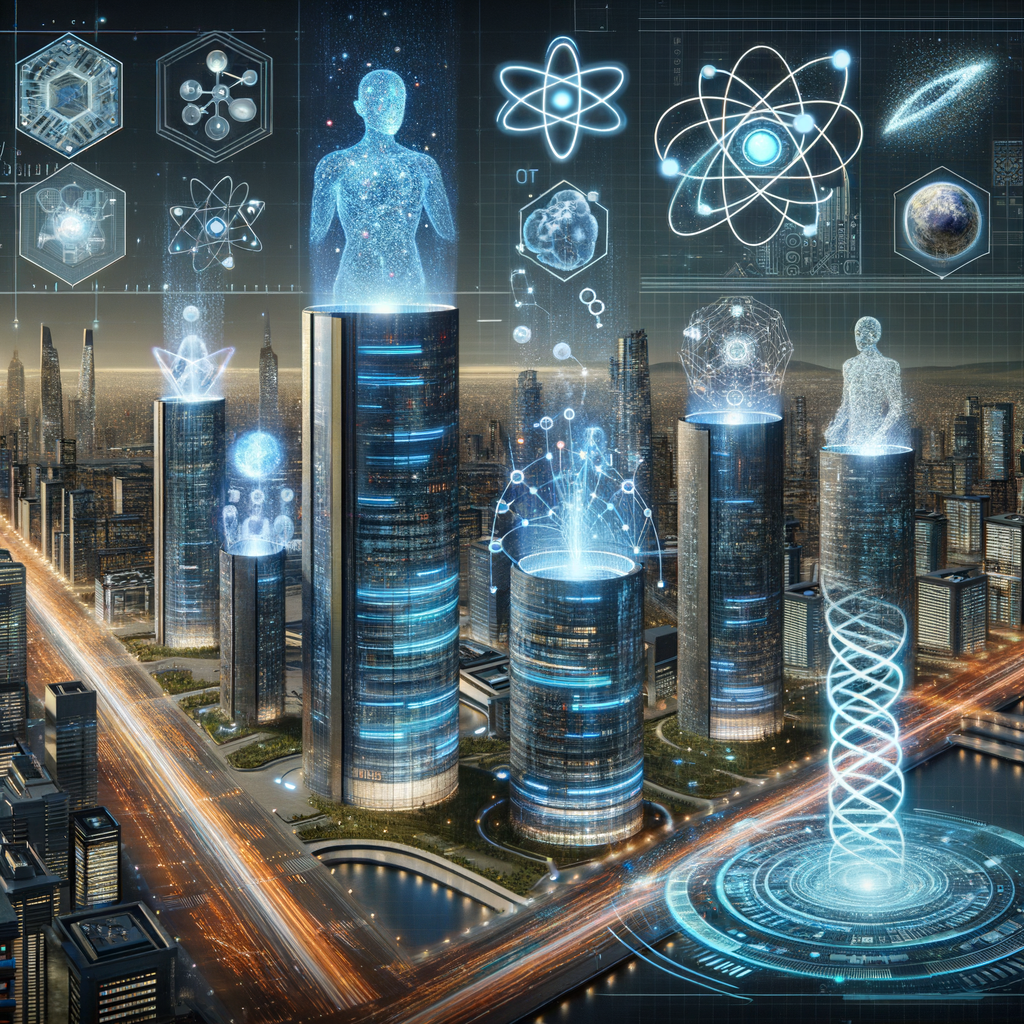
Looking forward, the potential applications of QHAI span across diverse domains such as healthcare, cybersecurity, and autonomous systems. Imagine predictive modeling in genomics achieved within fractions of a second or real-time traffic optimization in smart cities driven by QHAI analysis. As this technology matures, it promises to empower industries with capabilities that currently border on science fiction, turning these into practical, everyday solutions. The continuous symbiosis between AI advancement and quantum computing refinement will propel us towards a future where the boundaries of artificial cognition are not merely extended but reinvented.
def future_application_example():
    # Hypothetical example of traffic optimization using QHAI
    traffic_data = collect_real_time_data()
    optimized_routes = QHAI.optimize_traffic(traffic_data)
    apply_optimized_routes(optimized_routes)
    return optimized_routes
def QHAI.optimize_traffic(data):
    # Placeholder for complex quantum traffic algorithms
    return data.sorted()