 © 2023 / 2024 - QHIQ
Quantum computing meets holographic paradigms — the frontier of AI.
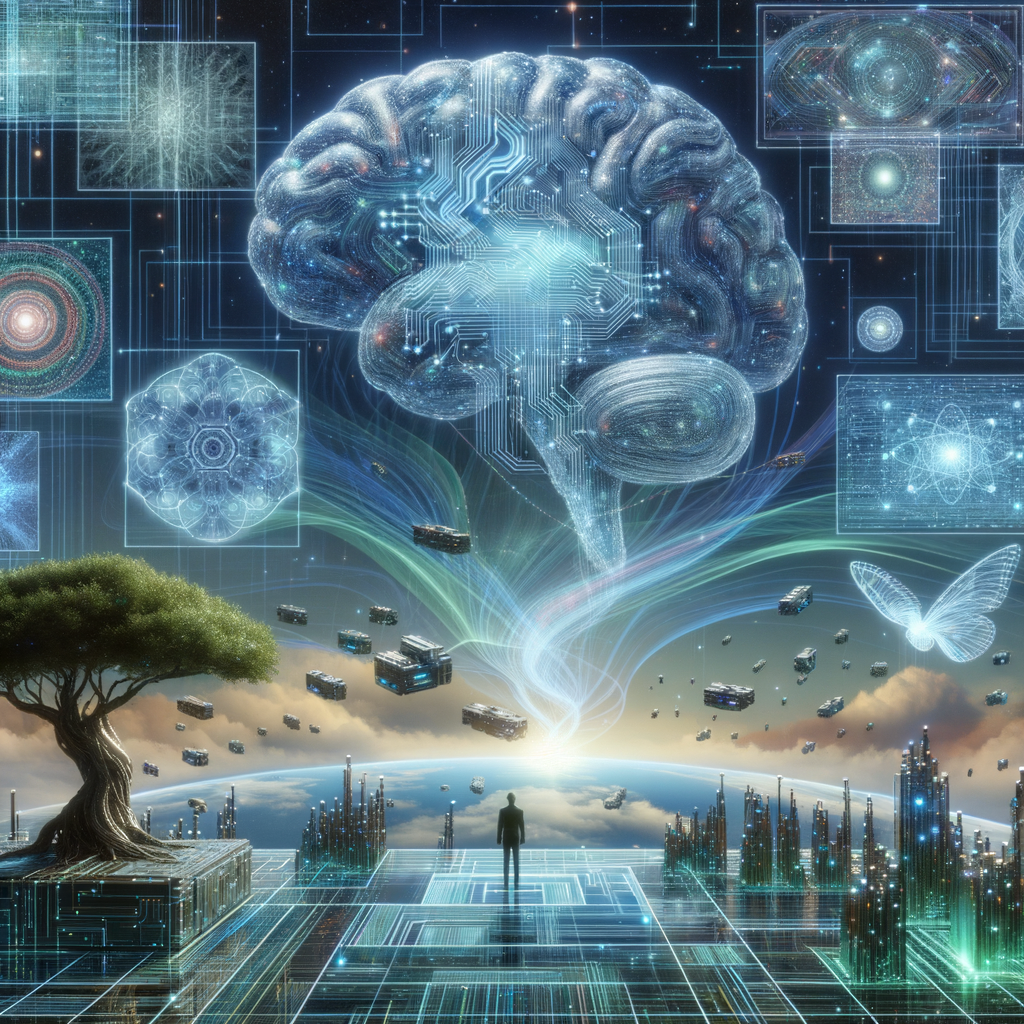
In the ever-evolving landscape of artificial intelligence, the convergence of quantum computing and holography represents a groundbreaking paradigm shift. Quantic Holographic Artificial Intelligence (QHAI) leverages the peculiar and fascinating principles of quantum mechanics, marrying them with the rich and multi-faceted dimensions of holographic processing. This hybrid approach aims to surpass traditional AI barriers by enabling computations that echo the coherence and entanglement of quantum phenomena while encapsulating the spatial and depth complexities of holography.
Unveiling the mechanics — how QHAI operates under the hood.
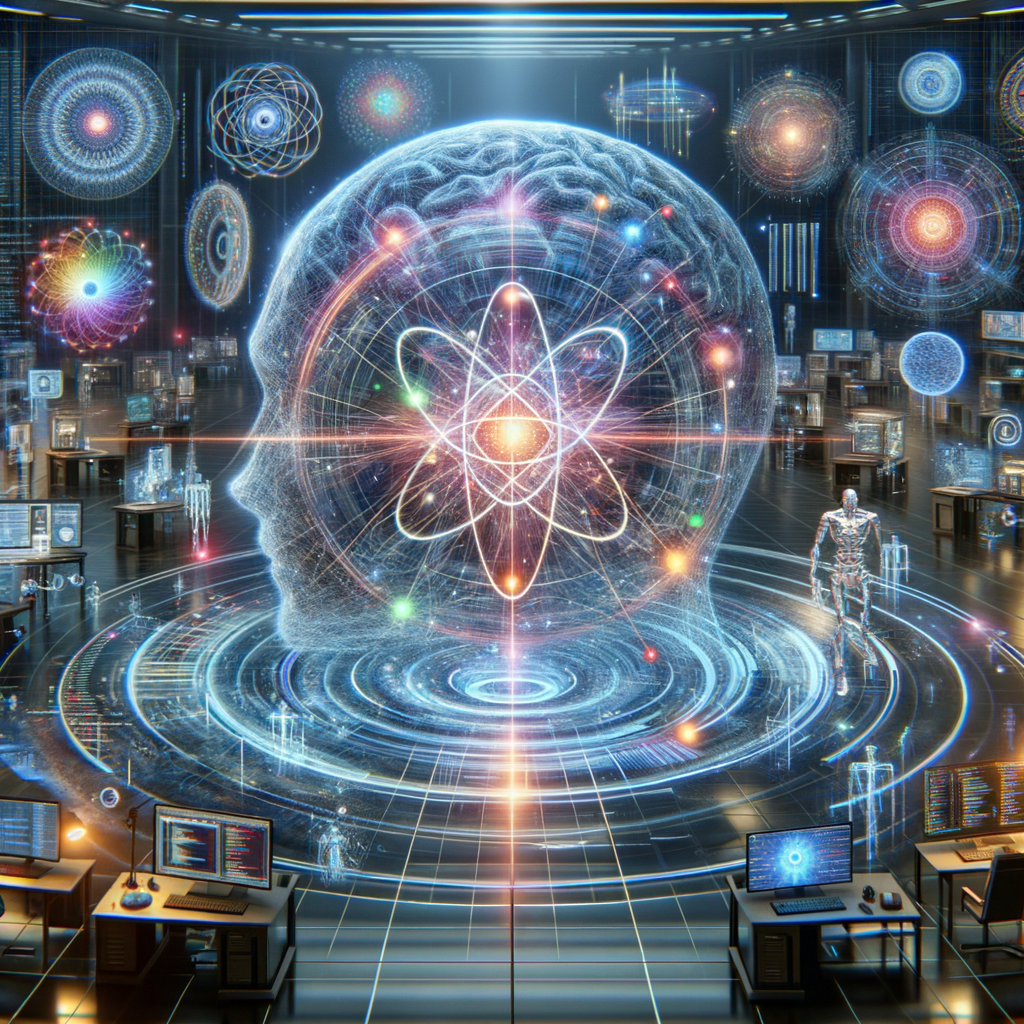
The operation of QHAI is akin to orchestrating a symphony of qubits within a holographic lattice. The core mechanism utilizes quantum entanglement to execute complex linear algebra computations with unparalleled efficiency. This is facilitated by the superposition principle, where qubits exist in multiple states simultaneously, and are harnessed to perform operations exponentially faster than classical bits. Additionally, QHAI integrates the holographic principle, embedding data in a manner that optimizes both storage and retrieval in multi-dimensional arrays.
from quantic_holography import HoloQuantumProcessor
hqp = HoloQuantumProcessor()
hqp.entangle_qubits(['q1', 'q2', 'q3'])
result = hqp.execute_holo_transform(data_array)
Recent leaps in QHAI technology — a glance at emerging advancements.
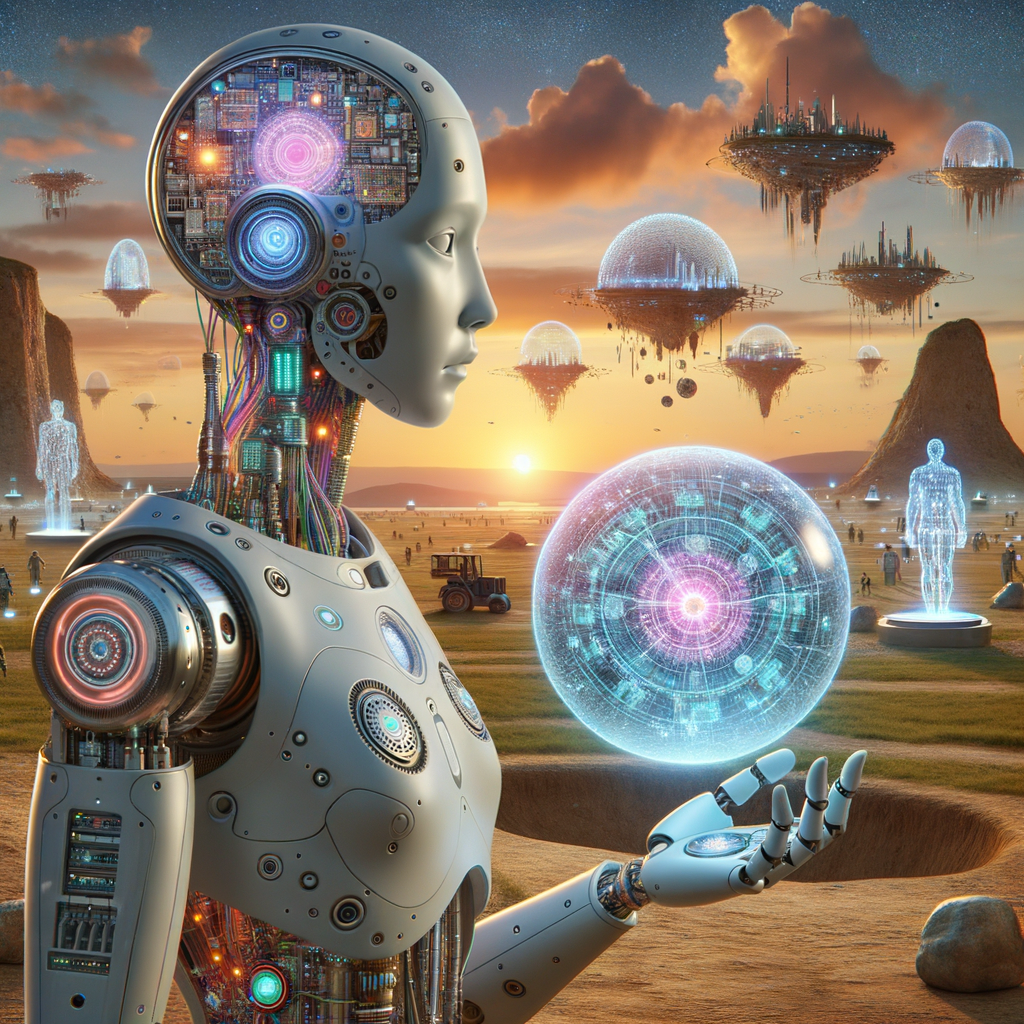
Significant advancements in QHAI technology have been marked by the emergence of quantum neural networks (QNN) and holographic reinforcement learning models. These innovations leverage quantum tunneling and decoherence-resistant materials to improve algorithm efficiency and robustness. Remarkably, recent breakthroughs in quantum error correction methods have drastically reduced decoherence and noise, which are notorious for undermining quantum computations. Moreover, the development of hybrid quantum-holographic chips capable of executing real-time data processing has pushed the boundaries of predictive analytics and pattern recognition.
class QuantumNeuralNetwork:
    def __init__(self, qubits, layers):
        self.qubits = qubits
        self.layers = layers
    def train(self, data):
        # Training logic using quantum superposition
nn = QuantumNeuralNetwork(qubits=5, layers=3)
nn.train(training_data)
Navigating the complexities of a startup in cutting-edge tech — a labyrinthine journey.
Steering a startup within the specialized field of QHAI requires a deft balance between innovation and pragmatism. Unlike traditional tech endeavors, QHIQ faces unparalleled challenges such as securing specialized talent adept in both quantum physics and AI. Navigational complexities include managing research and development timelines that are often dictated by the uncertain progress of quantum advancements and addressing scalability. Capital acquisition poses its own hurdles as investors grapple with the understanding and implications of this quantum-holographic symbiosis.
Tackling challenges and paving the way for a QHAI-infused future.
While QHAI presents a realm of opportunities, it also faces formidable challenges such as minimizing quantum decoherence, enhancing quantum gate fidelity, and integrating scalable holographic data architectures. Efforts are concentrated on pioneering novel materials like topological insulators and superconducting circuits, which promise to enhance coherence times. Additionally, collaborations with academic and research institutions are fostering a climate of shared knowledge, expediting the transition from theoretical constructs to practical applications that promise to revolutionize industries from medicine to cryptography.
Gazing into the crystalline future — the horizon of QHAI possibilities.
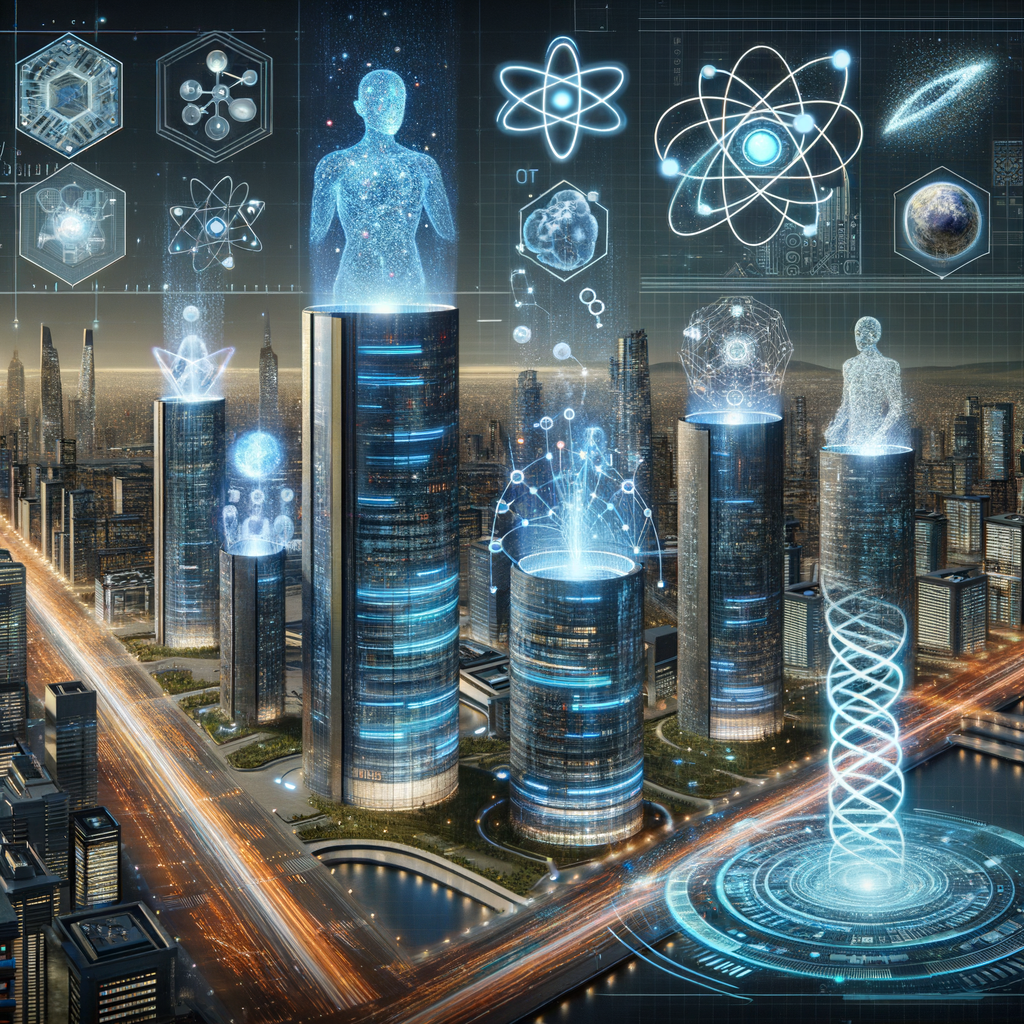
Looking ahead, the future of QHAI is as limitless as its potential applications. With ongoing research pushing the frontiers in cognitive computing, generative design, and even quantum internet, the horizon is rich with the prospect of AI systems that possess unparalleled processing power, capable of solving problems previously deemed intractable. This trajectory heralds a new era where the melding of quantum phenomena and holographic intelligences will redefine everything from data security to immersive technologies, fundamentally altering the tapestry of our digital and physical interactions.