 © 2023 / 2024 - QHIQ
Quantum computing and holography are converging to revolutionize AI!
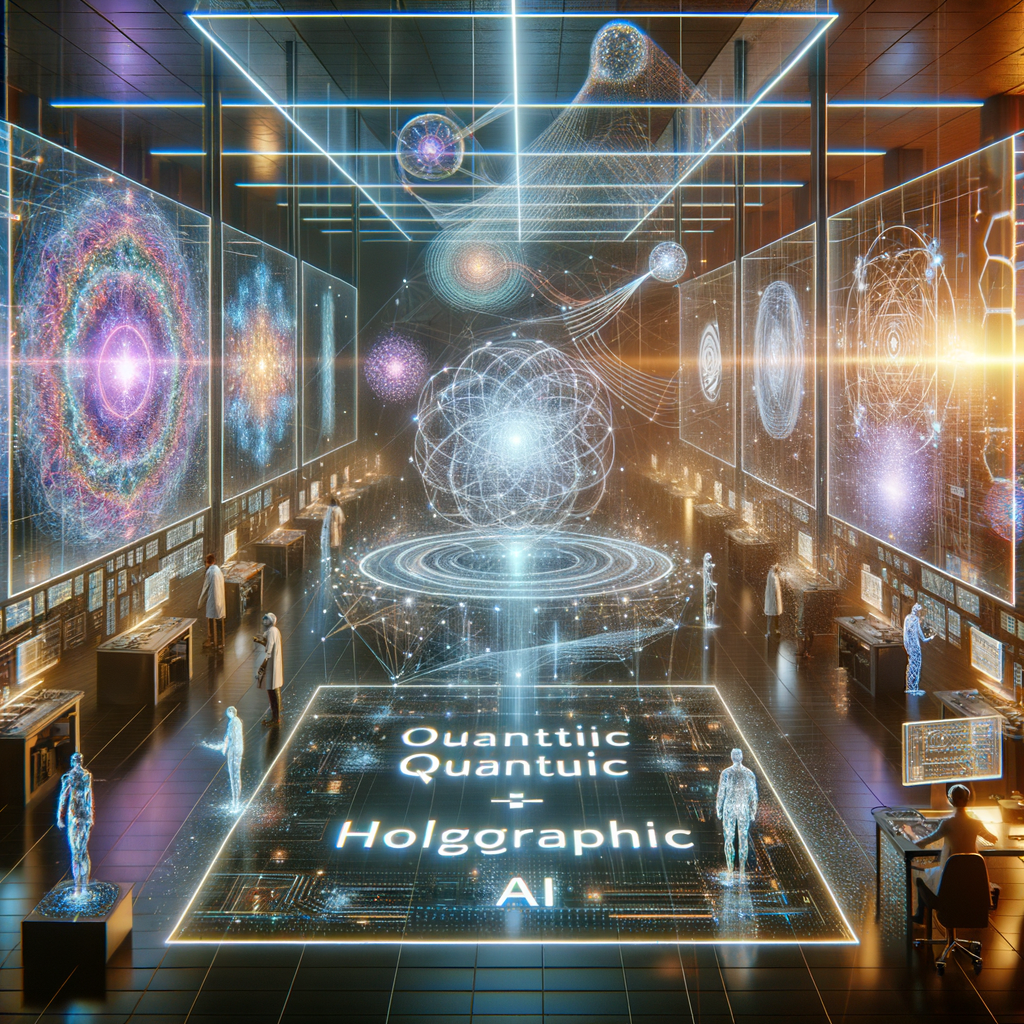
Quantum Holographic Artificial Intelligence (QHAI) represents the zenith of technological amalgamation where the quantum realm interlaces with the intricate mechanics of artificial intelligence. By leveraging the principles of quantum entanglement and superposition, Quantic Holographic AI seeks to transcend the classical limitations of AI by introducing a multidimensional, non-linear approach to data processing. Whereas traditional computational models rely on binary systems, QHAI embarks on the uncharted territories of qubits, enabling a paradigm shift in speed and efficiency for data processing.
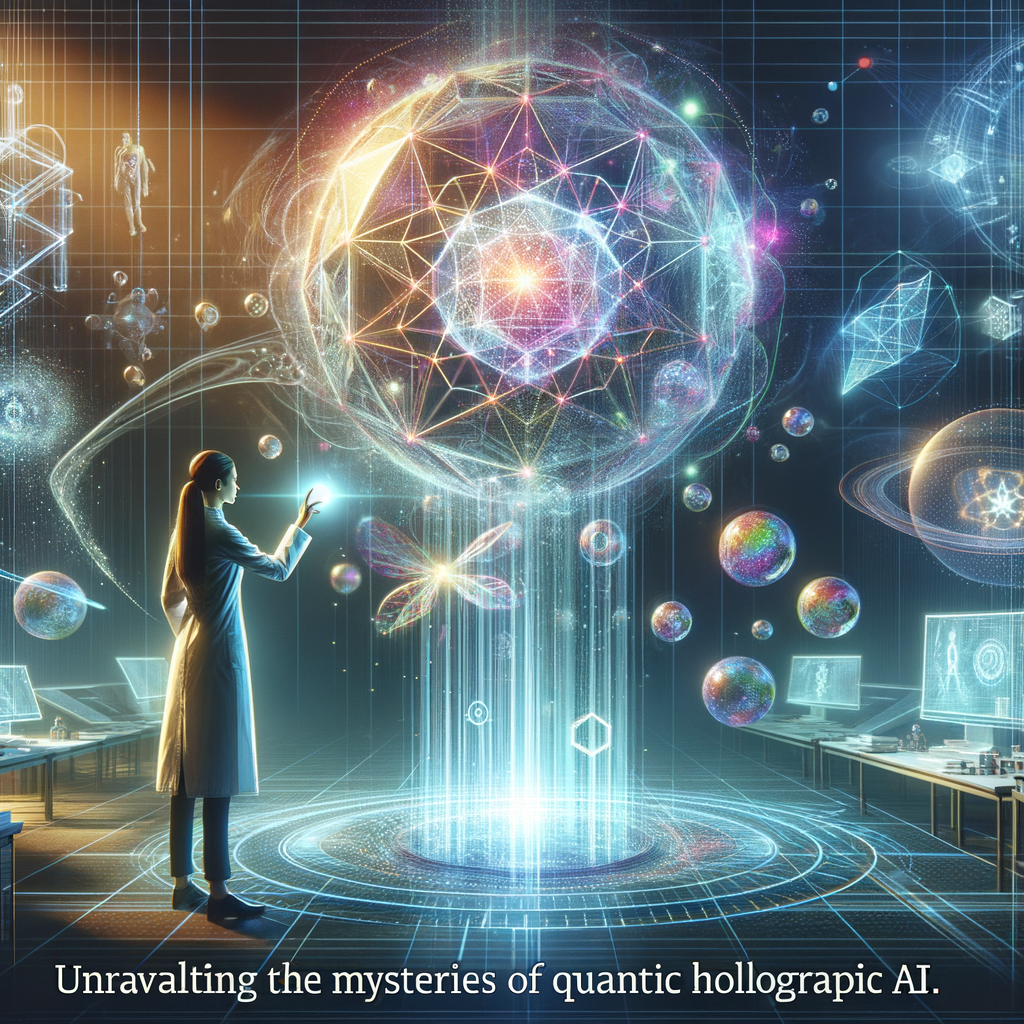
Unlocking the mysteries of quantum entanglement for AI applications.
The application of quantum entanglement within AI algorithms is quintessential in advancing machine learning and neural network capabilities. By harnessing the entangled states of qubits, AI can perform complex computations at speeds unfathomable to conventional models. This mirrors a parallelism that is inherently quantum in nature, vastly enhancing computational throughput. Researchers have developed 'quantum classifiers' which utilize entanglement to recognize patterns and draw inferences with unprecedented speed and precision.
class QuantumClassifier:
    def __init__(self, qubits):
        self.qubits = qubits
    def entangle_qubits(self):
        return sum(q.entangled_state() for q in self.qubits)
The rapid evolution within quantum architectures is driving AI forward.
Remarkable advancements have been made in developing quantum hardware architectures that support the burgeoning field of QHAI. Quantum circuits are being optimized to minimize decoherence, drastically increasing qubit coherence times. This allows for prolonged computational sessions and complex simulations. The integration of error-correcting codes within quantum circuits is another pivotal milestone, ensuring robust and reliable AI computations that can handle real-world complexities and uncertainties.
def optimize_quantum_circuit(circuit):
    optimized = apply_error_correction(circuit)
    return reduce_decoherence(optimized)
Scaling the quantum peaks: the hurdles that remain.
Despite the strides, the journey of implementing practical QHAI systems is laden with challenges. Quantum decoherence and noise remain significant barriers that necessitate groundbreaking innovations in quantum error correction and qubit stability. Furthermore, the requisite for highly specialized materials and infrastructure to support quantum operations presents a logistical hurdle, often leading to prohibitive costs. These factors combine to make quantum systems delicate, requiring nimble management strategies particularly in emerging technology environments such as ours at Quantum Holographic IQ.
Leading a startup in quantum tech requires agile and adaptive strategies.
Steering a startup like Quantum Holographic IQ within this dynamic landscape necessitates a balance between vision and pragmatism. One must navigate the treacherous waters of rapidly evolving technology while ensuring alignment with market demands and investor expectations. It's imperative to cultivate a culture of continuous learning and encourage interdisciplinary collaboration. Our approach leverages synergies across quantum physics, computer science, and AI, thereby fostering innovation and maintaining a competitive edge.
def foster_innovation(team):
    learn_continuously = True
    collaborate_interdisciplinary = True
    maintain_edge = learn_continuously and collaborate_interdisciplinary
The horizon looks promising for QHAI and its transformative potential.
As we gaze towards the future, the prospect of QHAI transforming industries, from healthcare and finance to communications and beyond, is exhilarating. With advancements in quantum algorithms and improvements in holographic techniques, the potential applications are boundless. Predictive modeling, real-time data analysis, and automated decision-making are but the precursors to the large-scale deployment of QHAI systems. At Quantum Holographic IQ, our mission is to pioneer this frontier, paving the way for technologies that transform theoretical possibilities into tangible realities.