 © 2023 / 2024 - QHIQ
Unveiling the Quantum Holographic Landscape.
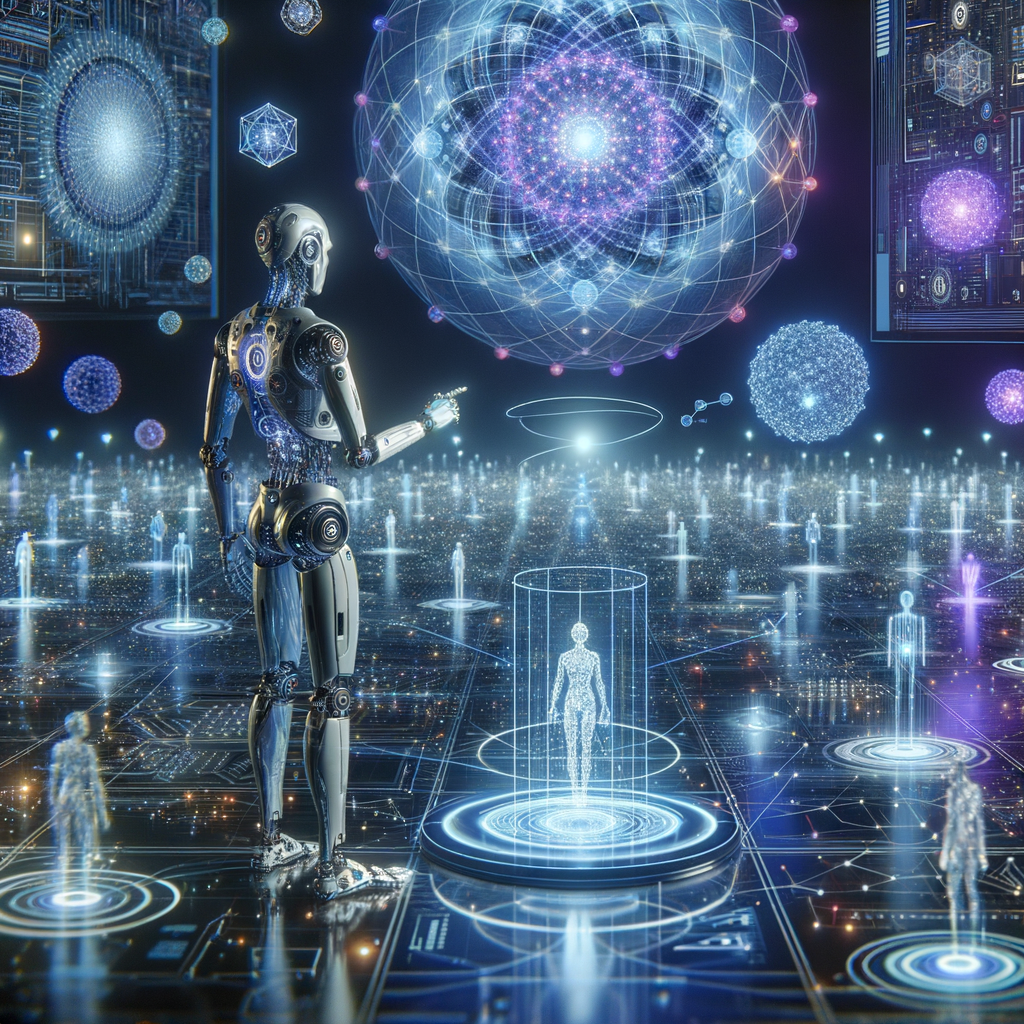
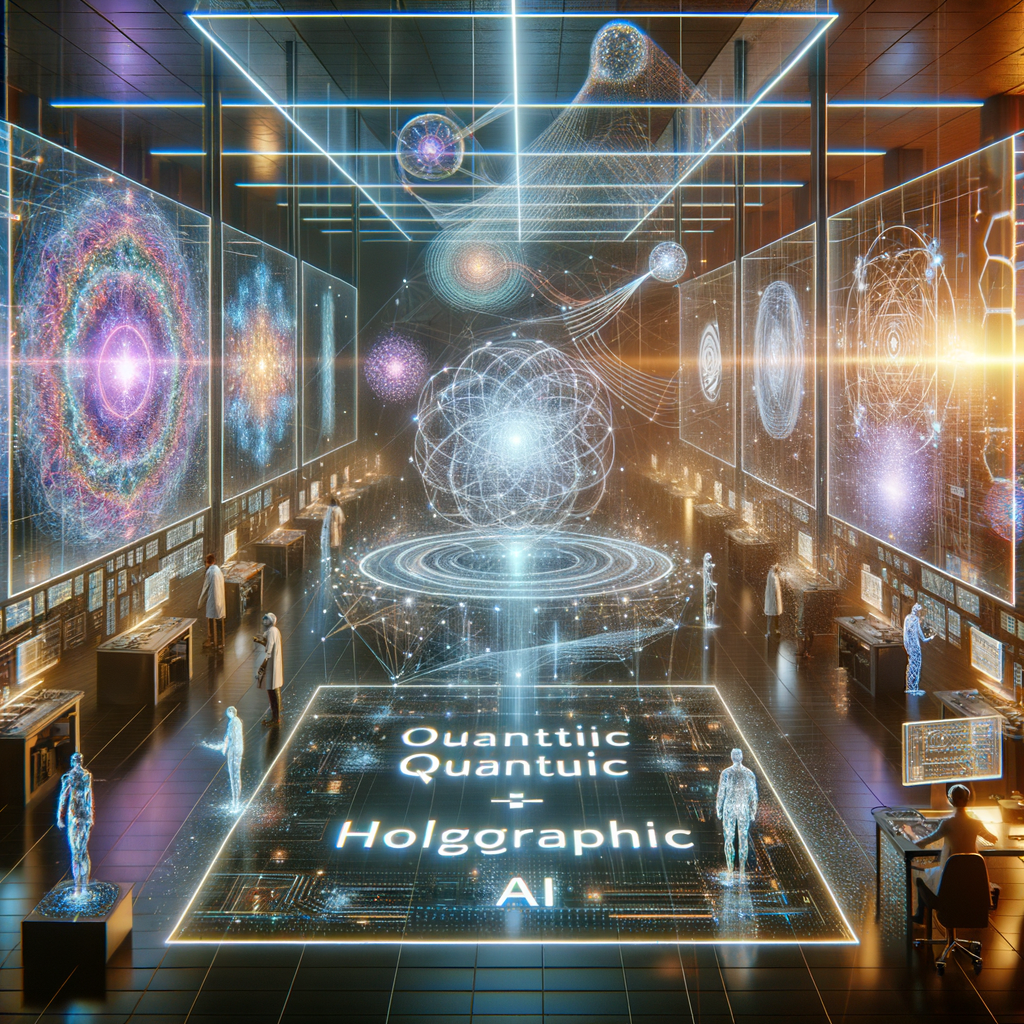
The fusion of quantum computing and holography has unlocked a potent paradigm in artificial intelligence—quantum holographic AI (QHAI). This burgeoning technology promises unprecedented computation power and data handling capabilities. Dipping into the dual properties of quantum bits, or qubits, and their holographic representation, QHAI models can simulate highly complex neural networks with greater efficiency and parallelism than classical models. By leveraging superposition and entanglement, QHAI systems dramatically increase the capacity for simultaneous calculations, leading to rapid advancements in AI capabilities.
Code that brings Quantum Holography to life.
At the core of quantic holographic AI is the interplay between quantum mechanics and holographic principles—where each piece of the data is interconnected and reflective of the whole. By employing Python and libraries like Qiskit, we are able to orchestrate quantum operations necessary for QHAI algorithm deployment. Here's a simple implementation of a basic quantum holographic module that can act as a building block for more complex systems.
from qiskit import QuantumCircuit, Aer, execute
qc = QuantumCircuit(3)
qc.h(0)
qc.cx(0, 1)
qc.cx(1, 2)
backend = Aer.get_backend('statevector_simulator')
result = execute(qc, backend).result()
state = result.get_statevector()
print(state)
The cutting-edge advancements in QHAI.
Recent breakthroughs in quantic holographic AI have seen an influx of innovative applications spanning various industries. From advancing the fields of medicine, with rapid genomics signal processing, to enhancing real-time financial forecasting models, the exploits of QHAI are boundless. Newly developed algorithms incorporating tensor network methodologies and hybrid quantum-classical architectures allow for the extraction of more nuanced patterns from vast datasets, thus improving predictive accuracy and decision-making efficacy in real time.
Startup challenges: From theory to commercial viability.
Building a startup like Quantum Holographic IQ in the nascent realm of QHAI presents a unique set of challenges. Capitalizing on cutting-edge technology requires not only technical expertise but also visionary foresight into market dynamics and potential regulatory landscapes. Issues such as high operational costs, the rarity of highly specialized talent, and the infrastructural demands of intensive quantum computation can pose substantial barriers. Strategic partnerships and constant innovation are crucial to overcoming these hurdles and steering QHAI startups toward sustainability and success.
The promising trajectory of QHAI.
Looking to the future, the prospects for quantic holographic AI are incredibly promising, with multiple pathways for development and implementation. The roadmap involves not only refining the quantum algorithms but also integrating these systems into existing infrastructures. With more investment into research and development, QHAI could revolutionize data processing methodologies and spawn entirely new sectors of technological innovation. As scalability issues are addressed and quantum hardware becomes more accessible, the potential for widespread adoption of this transformative technology becomes a distinct possibility.